Full-Service Execution
Venue, vehicle transport, insurance, security, catering, respondent management — you send the cars, we handle everything else.
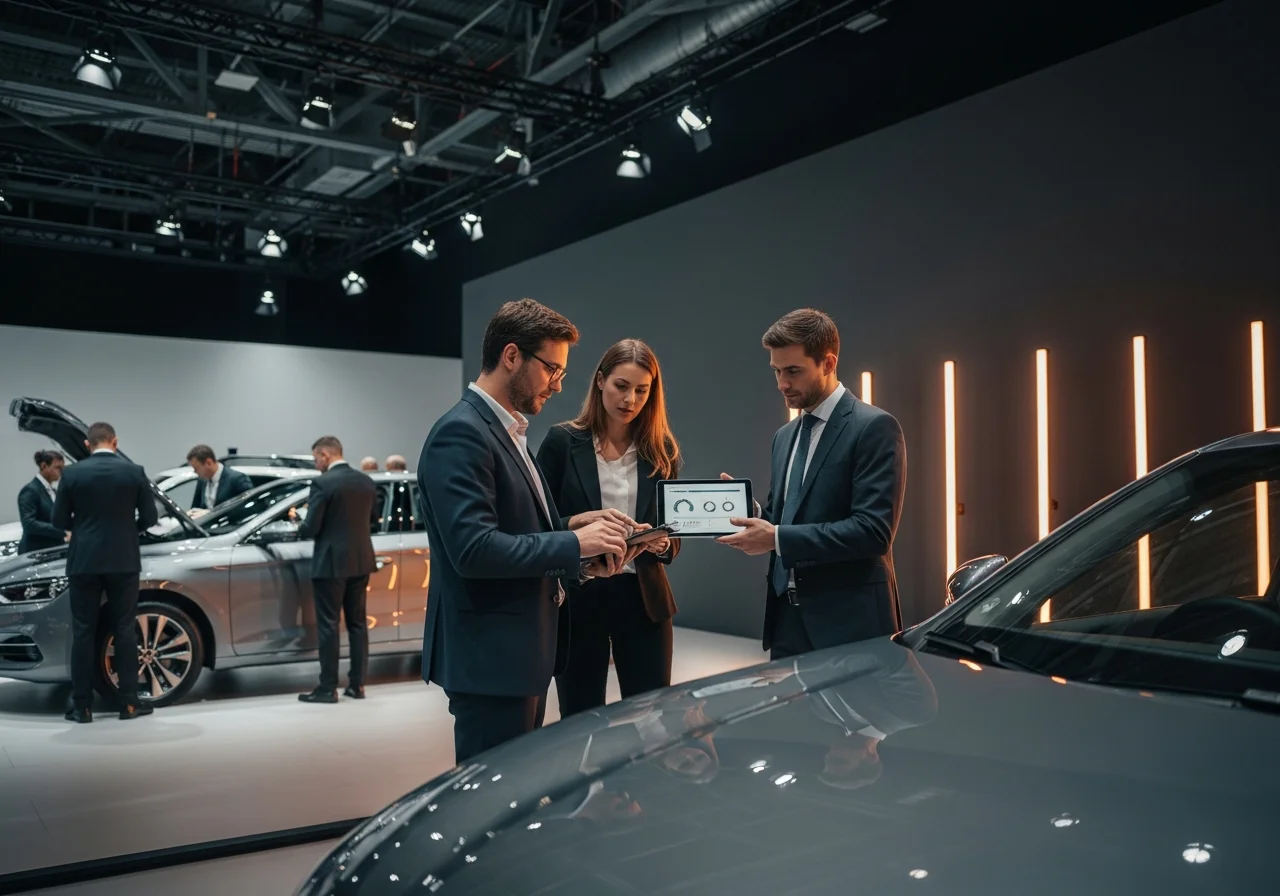
Pre-launch vehicle evaluation with target buyers under controlled conditions
A car clinic is a large-scale quantitative study in which 200–400 recruited target buyers evaluate pre-production or newly launched vehicles under controlled conditions — assessing exterior design, interior materials, cockpit ergonomics, and competitive positioning against rival models displayed side by side. The format originated in the 1960s with US automakers and remains the automotive industry’s primary tool for validating design, pricing, and feature decisions before committing to mass production. Fieldstat organises end-to-end car clinics in Poland: from venue logistics and vehicle security to precise buyer recruitment (segment intenders, current owners, powertrain preference) and an 80–150 point evaluation covering design perception, usability, brand fit, and purchase intent.
Poland as your Central European testing ground. Car clinics in Poland offer a unique advantage: access to a mature automotive market (over 400,000 new passenger cars registered annually) at significantly lower logistics costs than Western Europe. Warsaw, Krakow, and Katowice provide exhibition venues, experienced automotive consumers, and proximity to CEE markets — making Poland the natural choice for OEMs launching across the region. We recruit from a precisely defined buyer profile: segment intenders, current owners of specific makes, income bracket, planned purchase timeline, and powertrain preference (ICE, hybrid, BEV).
Three formats for different development stages. Static clinics — respondents see, sit in, and evaluate the vehicle without driving. This is the most common format, ideal for design, materials, cockpit ergonomics, and competitive positioning 12–18 months before launch. Dynamic clinics add a test drive on a closed track or controlled route, capturing ride comfort, cabin noise, acceleration feel, and driving dynamics. VR/digital clinics let respondents configure colour, trim, and interior options in virtual reality — fast, flexible, and useful when physical prototypes are not yet available.
What the data tells you. Our 80–150 point evaluation questionnaire captures first impression (approach, stance, proportions), exterior detail assessment, cockpit experience (materials, fit & finish, screen readability, storage), ergonomics (seating position, visibility, controls), and competitive comparison (direct ranking against 2–4 rival models on identical criteria). We supplement the questionnaire with eye tracking data showing where attention lands first, conjoint analysis revealing which configurations drive purchase intent, and qualitative interviews exploring the emotional drivers behind rational scores.
The investment — and what’s at stake. Car clinics are among the most expensive research formats: PLN 150,000–500,000+ depending on the number of vehicles, respondent count, venue, and security requirements. But consider what you are protecting: a single model launch represents hundreds of millions in tooling, production, and marketing. A car clinic that identifies a dashboard material issue, an infotainment frustration, or a pricing miscalibration before production sign-off delivers ROI measured in multiples, not percentages.
Sources: OICA, Polish Automotive Industry Association (PZPM)
| Format | What Respondents Do | What You Learn | Typical Cost |
|---|---|---|---|
Static clinic |
See, sit in, evaluate cockpit |
Design, ergonomics, materials, brand fit |
Medium |
Dynamic clinic |
Evaluate + test drive on track |
Ride comfort, dynamics, cabin noise |
High |
VR / digital clinic |
Configure in virtual reality |
Colour, trim, and tech preferences |
Low–medium |
Ride & Drive |
Full route on public roads |
Complete real-world experience |
Very high |
Competitive clinic |
2–4 rival models side by side |
Segment positioning, perceived value gap |
Varies by model count |
Venue, vehicle transport, insurance, security, catering, respondent management — you send the cars, we handle everything else.
We recruit by exact profile: segment intenders, specific makes/models owned, income, purchase timeline, powertrain preference (ICE/hybrid/BEV).
Beyond questionnaires: we capture where buyers look first and which configurations drive purchase intent.
Poland gives you Central European consumer insights at 40–60% lower logistics costs than Germany or France.
We define the research questions, select the clinic format, plan the vehicle lineup, and map the evaluation protocol.
We secure a location (exhibition hall, hotel, track), arrange vehicle transport, insurance, and NDA-compliant security measures.
We recruit 200–400 respondents matching your target buyer profile — segment, income, brand consideration, purchase intent.
Respondents evaluate vehicles in structured waves. Tablet-based questionnaires, eye tracking, and qualitative interviews run in parallel.
Competitive scorecards, design heat maps, configuration conjoint results, and actionable recommendations for product, pricing, and positioning.
Costs range from PLN 150,000 to 500,000+ depending on vehicle count, respondent sample, venue, security, and whether dynamic driving is included. Poland offers 40–60% cost savings compared to equivalent clinics in Germany or France.
Typically 200–400 for a standard car clinic. Respondents are recruited by precise criteria: segment intenders, current owners of competing models, income bracket, and planned purchase timeline.
All venues are secured with restricted access, CCTV, and on-site security personnel. Respondents sign NDAs before entering. No personal phones are permitted in the evaluation area. Vehicles are transported in covered carriers.
Yes. We design EV-specific evaluation modules covering range expectations, charging experience, regenerative braking feel, cabin sound design, and the transition from ICE. The Polish market is rapidly adopting EVs, providing a relevant consumer base.
Static clinics focus on visual and tactile evaluation (design, materials, cockpit, infotainment) without driving. Dynamic clinics add a test drive, capturing ride comfort, acceleration, handling, and cabin noise. Static is faster and cheaper; dynamic provides a complete evaluation.
Preparation (recruitment, logistics, questionnaire) takes 4–6 weeks. The clinic itself runs 3–5 days. Report delivery within 2 weeks after fieldwork. Total timeline: 8–12 weeks.
Yes — competitive benchmarking is the core purpose of most car clinics. We display your vehicle alongside 2–4 competitor models and respondents evaluate all of them on identical criteria, producing a direct competitive scorecard.
External sources and industry organizations related to this research method:
This method is frequently used in the following research solutions: